Materialism
Surprised by JoyMaterialism in C. S. Lewis’s memoir is more than a denial of religious belief: it is a demanding account of what counts as real. During the Bookham period, he treated the sensory universe as fundamental and explained apparent beauty and value as products of subjective experience. The position attracted him because it excluded the Christian God and promised limits to suffering, yet its costs were severe: nearly everything he loved belonged to imagination, while what he accepted as real seemed grim and meaningless. His later reflections show how literary encounters and philosophical criticism began to unsettle that bargain.
Formation and Appeal
Lewis describes a sharp division between his imaginative life and his intellectual convictions. Poetry and myth filled one side of his mind; on the other stood what he calls a glib and shallow rationalism. He loved gods and heroes, the Garden of the Hesperides, Lancelot, and the Grail, but regarded atoms, evolution, and military service as realities. Nature, as it appeared to the senses, was among the few things he both loved and believed in. Its beauty alongside its cruelty, waste, and apparent futility left him with a persistent problem: how could the beautiful world also seem so indifferent?
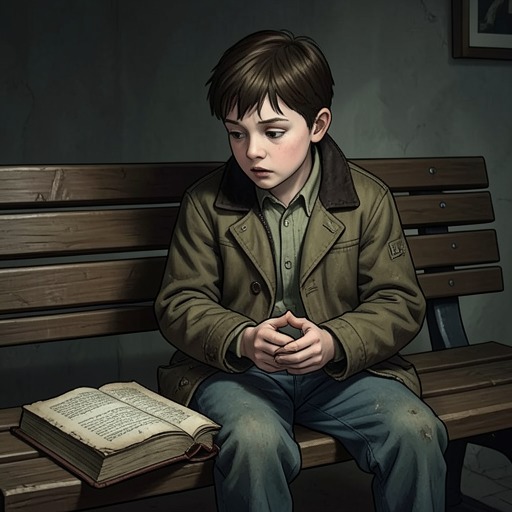
Materialism’s particular appeal was negative. Lewis remembered his earlier period of Christian faith as containing fear, and later recognized that he had magnified that feature while forgetting other elements of the experience. He especially wished to avoid the fear associated with full-moonlit nights in the dormitory. His temperament intensified the attraction: he was more eager to escape pain than to secure happiness, and resented having been created without his consent. A materialist universe seemed to offer limited liabilities: death ended existence, and no infinite disaster could follow. Christianity, by contrast, appeared to have no exit. The Christian forms he had encountered also failed to satisfy his aesthetic sense; he associated the religion largely with unattractive architecture, music, and poetry, with Wyvern Priory and Milton as rare exceptions.
That attraction did not make Materialism an easy comfort. Lewis says it had one great advantage for him and no other. To accept it meant looking upon reality as a meaningless dance of atoms, as he encountered it in Lucretius, and treating apparent beauty as subjective phosphorescence. Everything he valued had to be relegated to the realm of illusion. He tried to pay that intellectual price loyally, partly because Kirk had taught him to respect intellectual honesty and to regard voluntary inconsistency as shameful. In arguments with Arthur, however, he also displayed a boyish pride in what he imagined was his enlightenment; his later account judges many of those arguments crude.
Sources of Doubt
The weakening of Lewis’s materialist confidence came, in his account, from sources other than a wish to recover comfort or religious faith. Reading W. B. Yeats introduced him to a respected writer who seriously believed in a spiritual order and in the possibility of contact with it. Lewis had assumed that rationalism rested on the findings of science, but, not being a scientist, he had received those findings on authority. Yeats presented a competing authority: someone outside traditional Christian orthodoxy who rejected Materialism. Lewis then read Maurice Maeterlinck. These encounters did not immediately supply a settled alternative, but they made it harder to treat Materialism as the only intellectually credible position.
The change also exposed a tension in the worldview itself. Lewis and Arthur considered themselves realists because they accepted the sensory universe as fundamental. At the same time, they continued to claim that disciplined abstract thought could yield indisputable truth, that moral judgments were valid, and that aesthetic experience had value beyond mere pleasure. Lewis later reports that Owen Barfield showed him the inconsistency: if thought were only a subjective event, the claims made for reason, morality, and beauty would not follow from their account of reality. Barfield’s challenge therefore reached beyond any single religious doctrine and called into question the intellectual framework that had supported Lewis’s Materialism.
Barfield also helped Lewis recognize what he later named chronological snobbery: the assumption that an idea is discredited simply because it belongs to the past. An older position, Lewis came to see, must be examined to discover whether it was actually refuted or merely fell out of fashion. The same scrutiny applies to the present, which also has characteristic assumptions and illusions. This change in method mattered to his reconsideration of Materialism: the intellectual climate of his own age could no longer serve as self-validating proof that older religious or philosophical views were false.
The Unstable Compromise
Lewis’s engagement with occult writing gave him a fresh reason to wish Materialism true while diminishing his confidence in it. Fear of supernatural beings made the materialist creed attractive because it seemed to exclude them. At the same time, Lewis found himself entertaining a possibility that the universe might combine the immediate security of Materialism with something beyond it, though he could not say what that beyond might be. He recognized this as an attempt to keep the comforts of both a materialist and a spiritual philosophy without accepting the disciplines of either.
The episode nevertheless produced a lasting correction. Lewis developed an antipathy to occult and magical interests that later helped him resist their attraction when he encountered magicians and spiritualists at Oxford. He did not claim that the temptation disappeared; rather, he had learned to recognize it as a temptation. Most importantly, he concluded that Joy did not point toward occultism. This distinction kept his experience of longing separate from the supernatural claims that had momentarily seemed to explain it.
From Unbelief Toward Religious Inquiry
Lewis’s later position did not emerge as a simple reversal from Materialism to Christianity. By the stage he describes in connection with churchgoing, the practice remained symbolic and provisional, and he could not say that it had helped move him toward Christian belief. He and his companion Dom Bede Griffiths believed in God and were willing to hear more about God from Pagan or Christian sources. The question had begun to shift from choosing one plainly true religion among many to understanding how religious traditions might relate to one another.
Lewis identifies two influences on that shift: a remark about the Dying God that suggested the story had happened once, and Barfield’s encouragement to approach Pagan myth with greater respect. This development revises the earlier opposition between imaginative value and intellectual reality. Materialism had required Lewis to admire myths as imaginative creations while denying them truth; his later inquiry made room for the possibility that religious ideas could not be dismissed merely as nonsense or illusion. In retrospect, Materialism was both a defense against the fear associated with his childhood experience of faith and a position whose own account of reason, beauty, and value proved difficult to sustain.